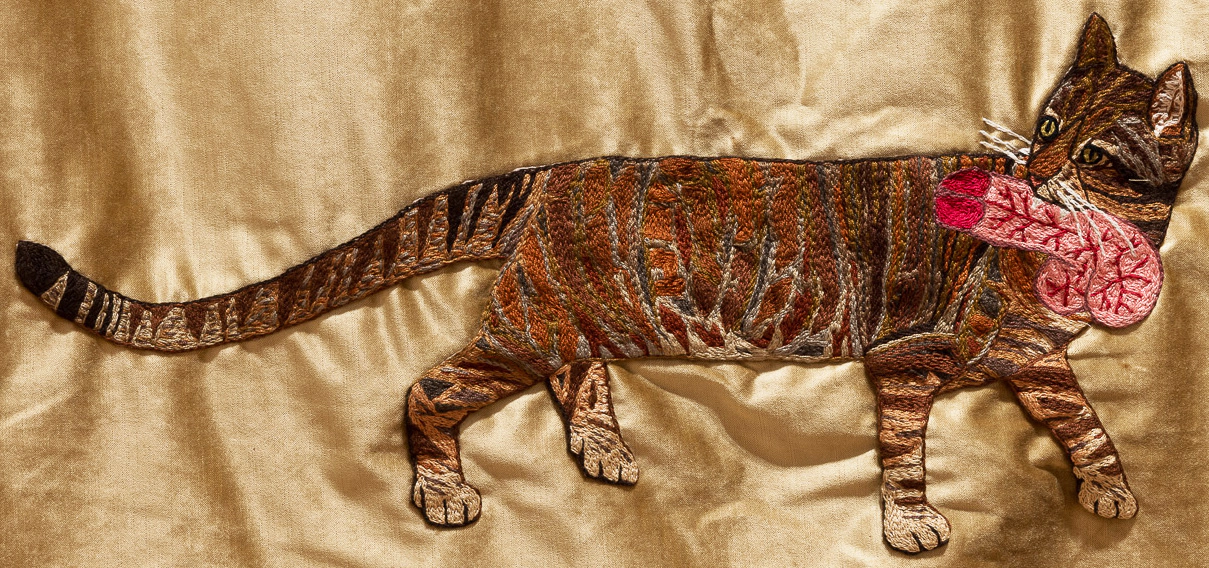
The Witches’ Sabbat (detail), 2026, embroidered textile
Tags: AstrologyBoston Women’s Health Book CollectiveCarson, AnneCatalogueChickensColonialismCommons EnclosureConsciousness-RaisingEncyclopaediaEnlightenment, TheFeminismFree LoveHealingLines and GridsNapier, RichardOur Bodies OurselvesPrintingRecipesSelf-DefenceSistersVocal Cord ParesisWitchcraftWomen’s Liberation
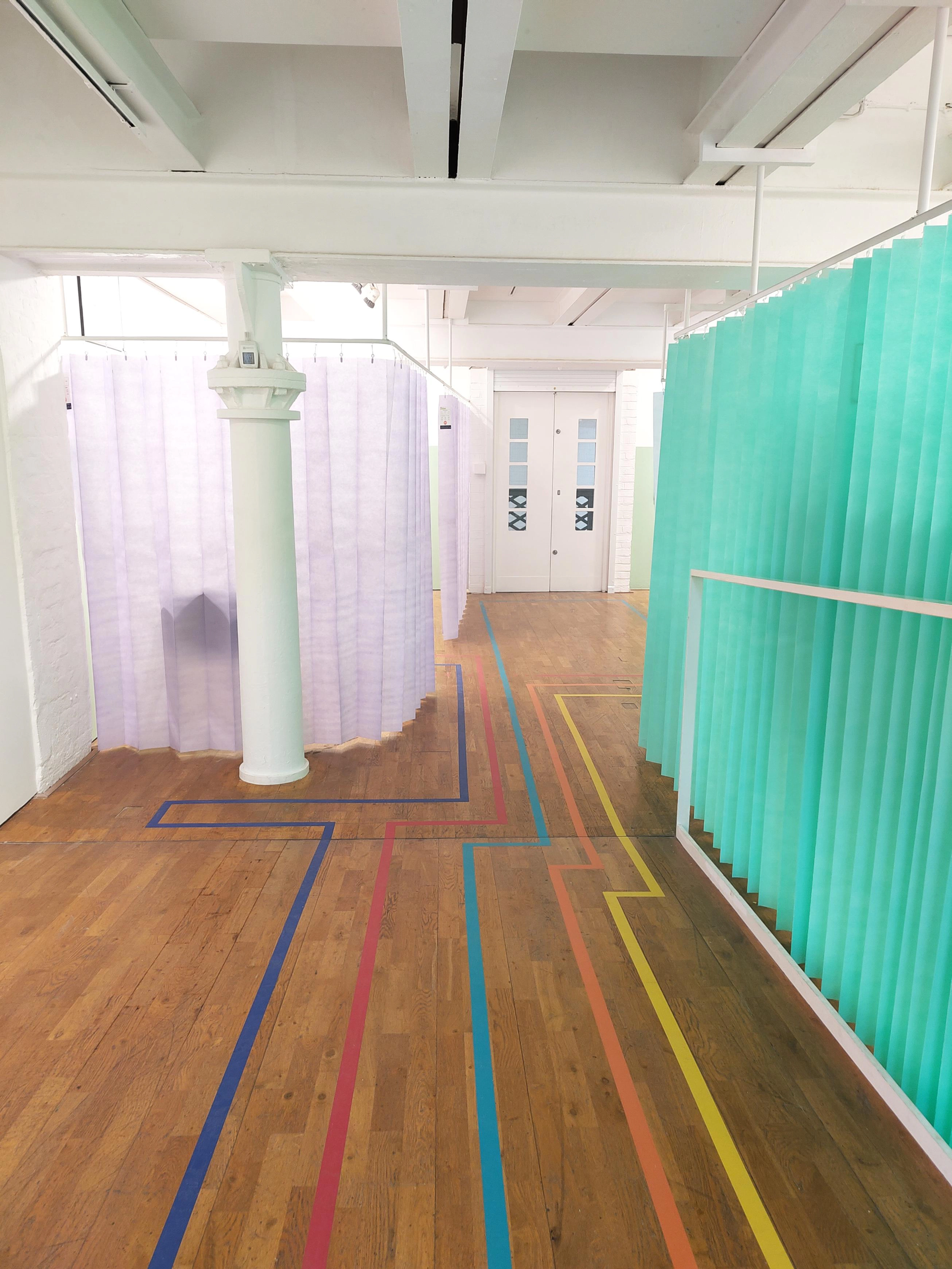
Our Bodies Are Not the Problem, 2026, permanent marker on whiteboard, hospital curtains, vinyl lines on floor
‘Little Fennel’s Complaint’
solo exhibition at Modern Art Oxford, 2026
In this exhibition, I explore the history of medicine in relation to ongoing inequalities in women’s healthcare – from early modern witchcraft to contemporary debates on reproductive rights, disability and medical authority. Working closely with medical humanities scholars, I researched how women were pushed out of medical roles in the transition to modern medicine and the ongoing impact on women’s encounters with the healthcare system today. Through embroidered textiles, watercolour paintings, installation, as well as three 17th century manuscripts loaned from Oxford University’s Bodleian Library, the exhibition invites us to reflect on how approaches to medical diagnoses have changed throughout history. In the artworks I examine different forms and systems of knowledge about health – from oral traditions passed down between generations of women to fairytale narratives, folk practices, astrological diagnosis and encyclopaedic methods of categorisation.
The title Little Fennel’s Complaint references the Rapunzel fairytale, in which the heroine was originally known as “little fennel” or “little parsley”. Fennel and parsley have been traditionally used as abortion plants, casting the fairytale in a new light and reframing Rapunzel’s story as one about female bodily autonomy, agency, and control – rather than the familiar narrative of imprisonment and heroic rescue by a prince. ‘Complaint’ is a word play on complaining and medical complaints. It references a historic and enduring pattern of women’s health issues being dismissed as ‘complaining’ and not listened to or taken seriously.
"Olivia Plender’s show, ‘Little Fennel’s Complaint’ explores people’s strenuous attempts to define the contours of their pain in language...and the simultaneous dismissal of such efforts, the silence to which sick bodies are too often consigned." –Luisa Lorenza Corna on Olivia Plender: Little Fennel's Complaint, Art Monthly no. 498, July-August 2026
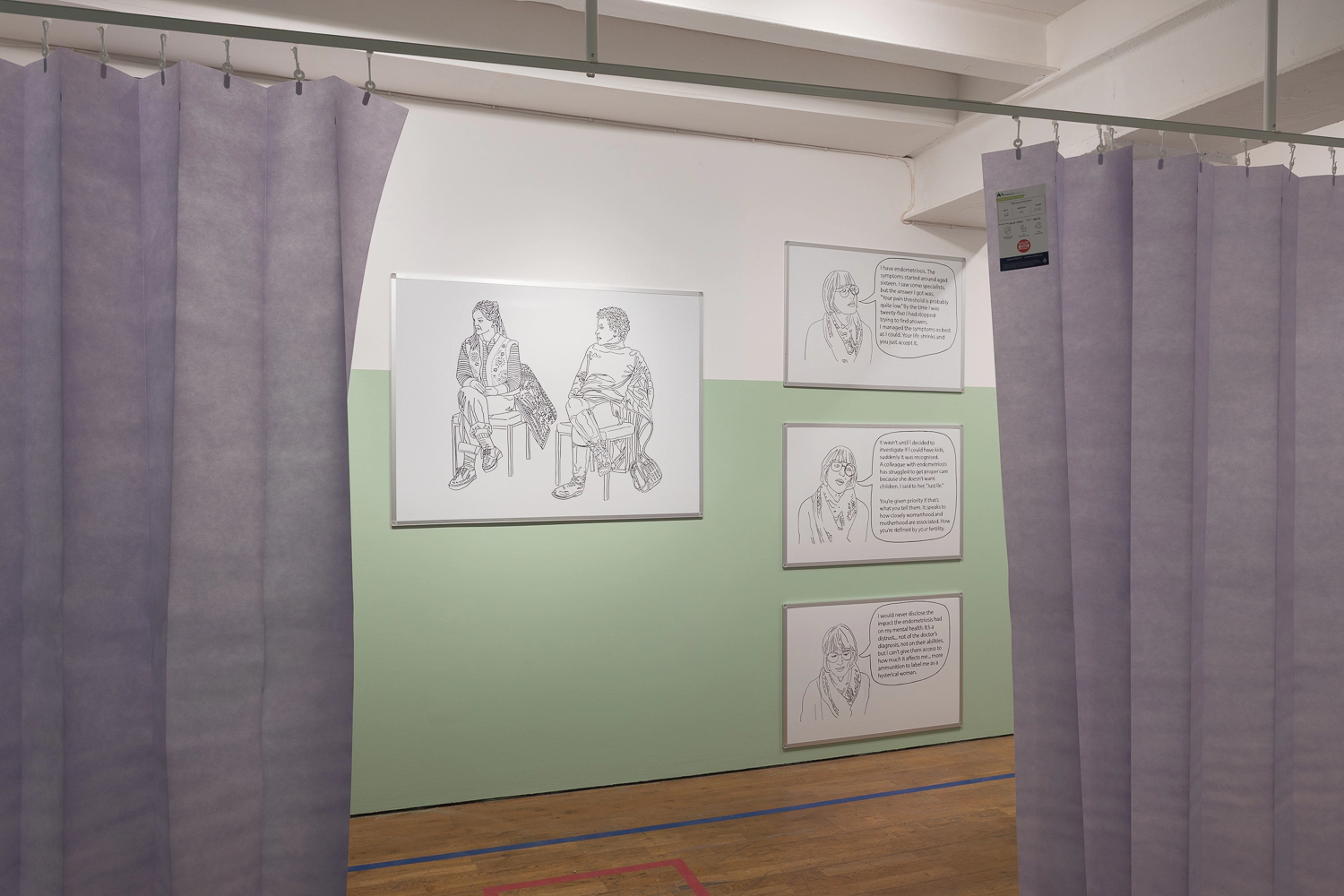
Our Bodies Are Not the Problem (detail), 2026, permanent marker on whiteboard, hospital curtains, vinyl lines on floor
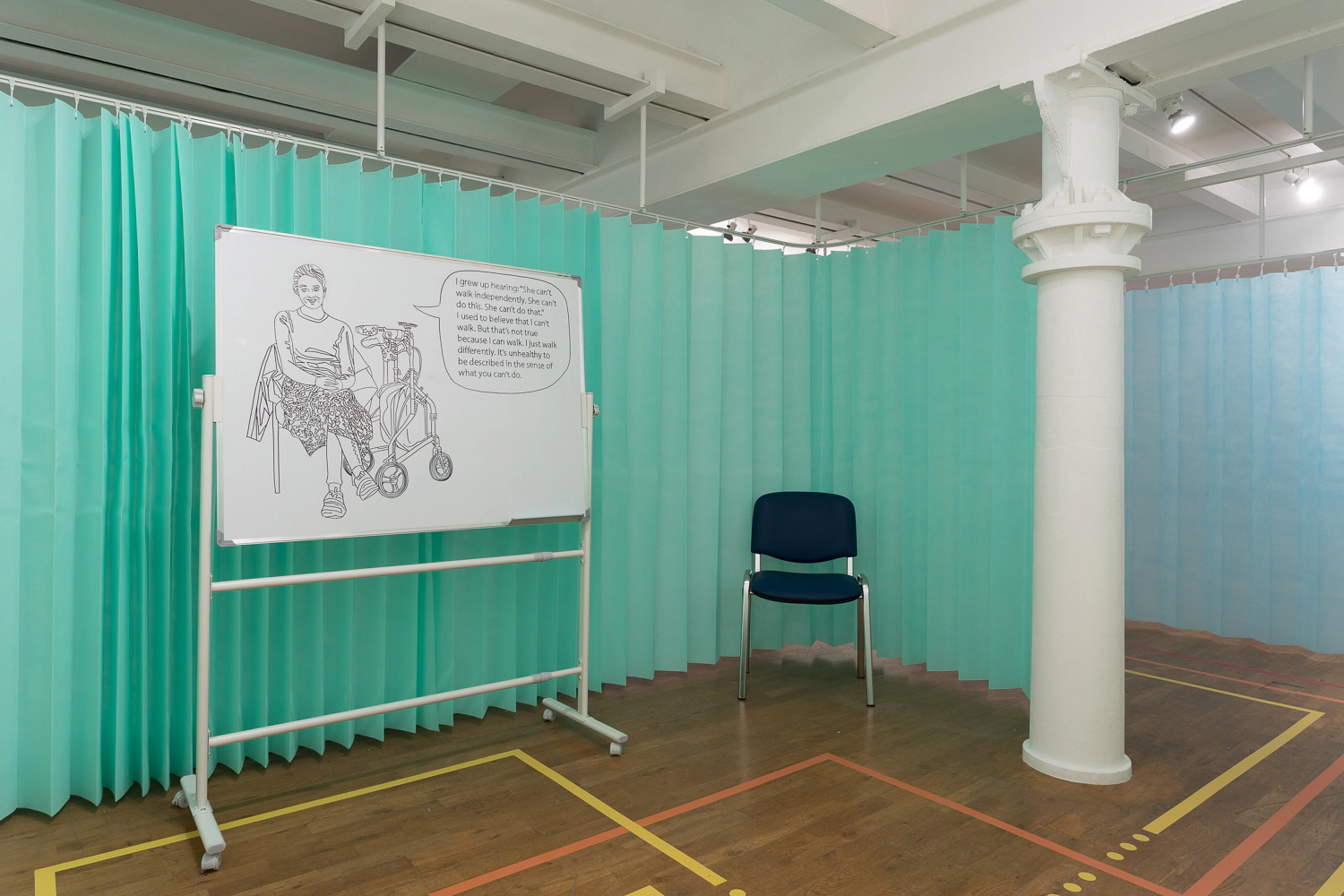
Our Bodies Are Not the Problem (detail), 2026
permanent marker on whiteboard, hospital curtains,
vinyl lines on floor
Our Bodies Are Not the Problem, 2026
permanent marker on whiteboard, hospital curtains, vinyl lines on floor
The exhibition begins with an installation examining present-day structures of the UK healthcare system, based on my ongoing project with the Glasgow Women’s Library. The whiteboard drawings occupy a series of consulting rooms inspired by contemporary healthcare spaces, situating the experiences of women within the architectures and structures that shape them. On the floor is a maze of lines reminiscent of those often found in hospital spaces to provide directions around the building. Presented here as a disorientating tangle of colour, these haywire lines reflect the challenges of navigating the UK healthcare system today, highlighting the relationship between ill health, disability and structural inequality in the UK.
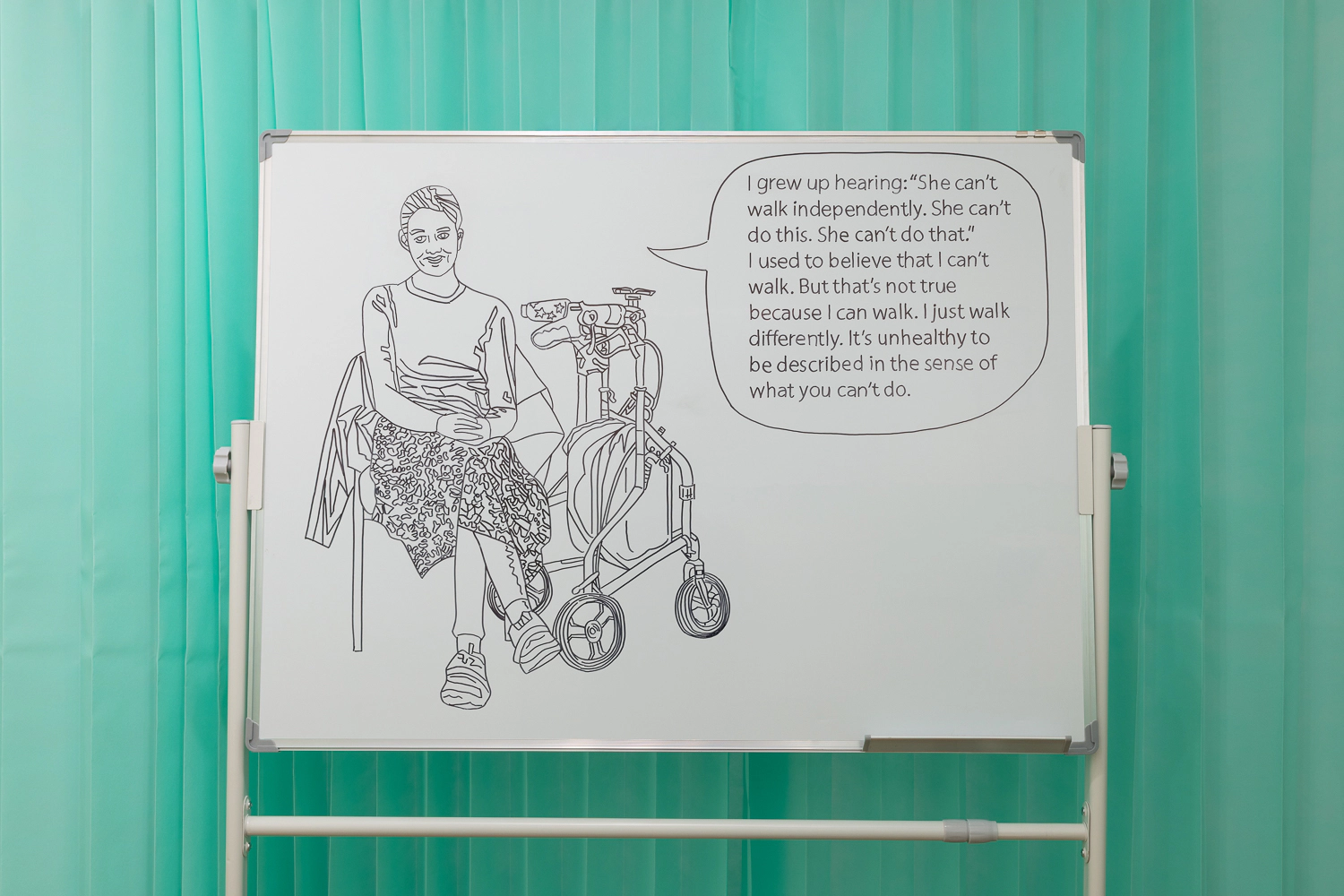
Our Bodies Are Not the Problem (detail), 2026, permanent marker on whiteboard, hospital curtains, vinyl lines on floor
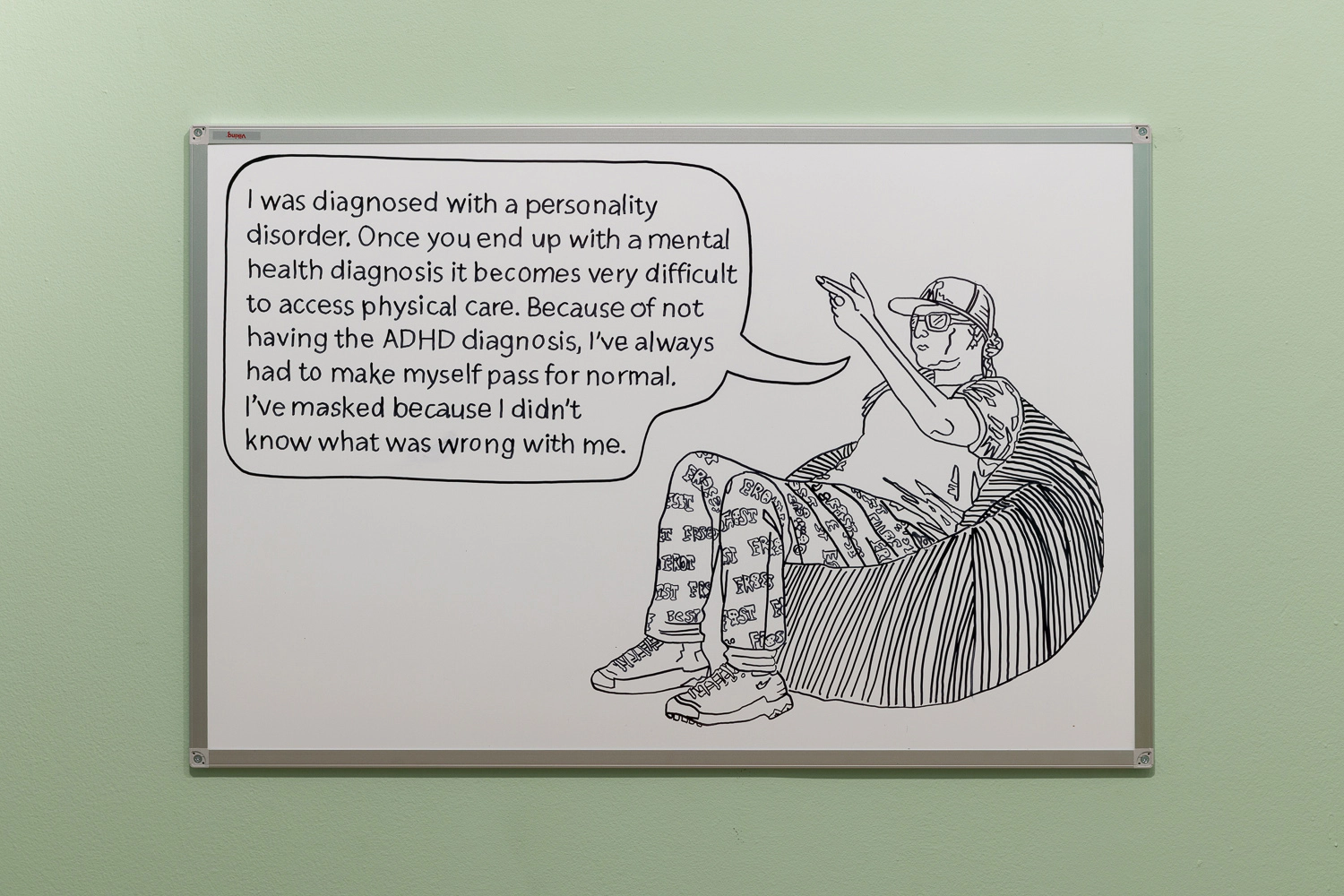
Our Bodies Are Not the Problem (detail), 2026
permanent marker on whiteboard, hospital curtains, vinyl lines on floor
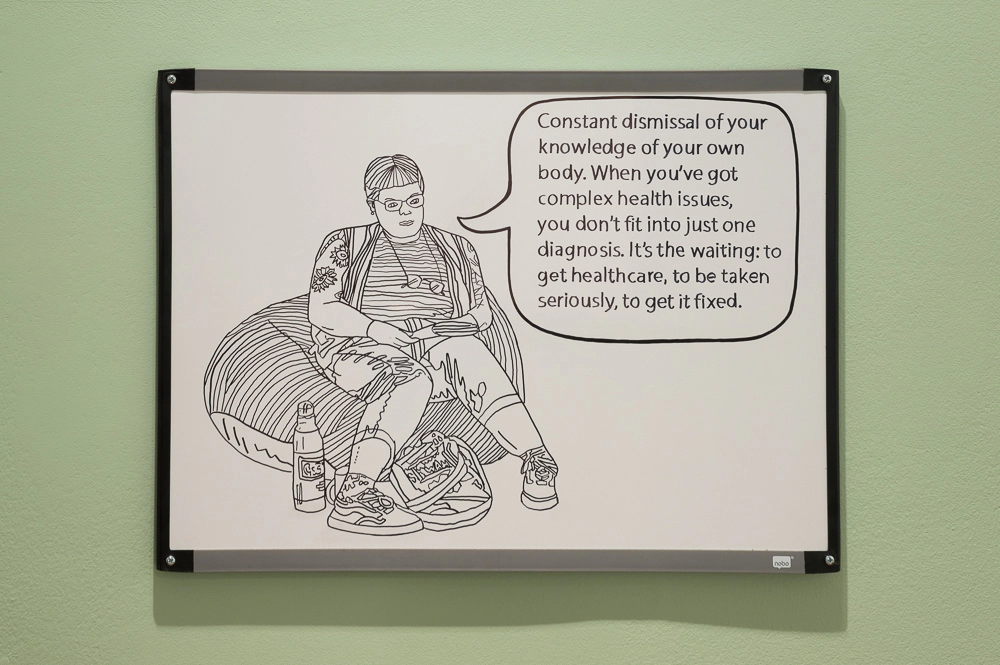
Our Bodies Are Not the Problem (detail), 2026
permanent marker on whiteboard, hospital curtains, vinyl lines on floor
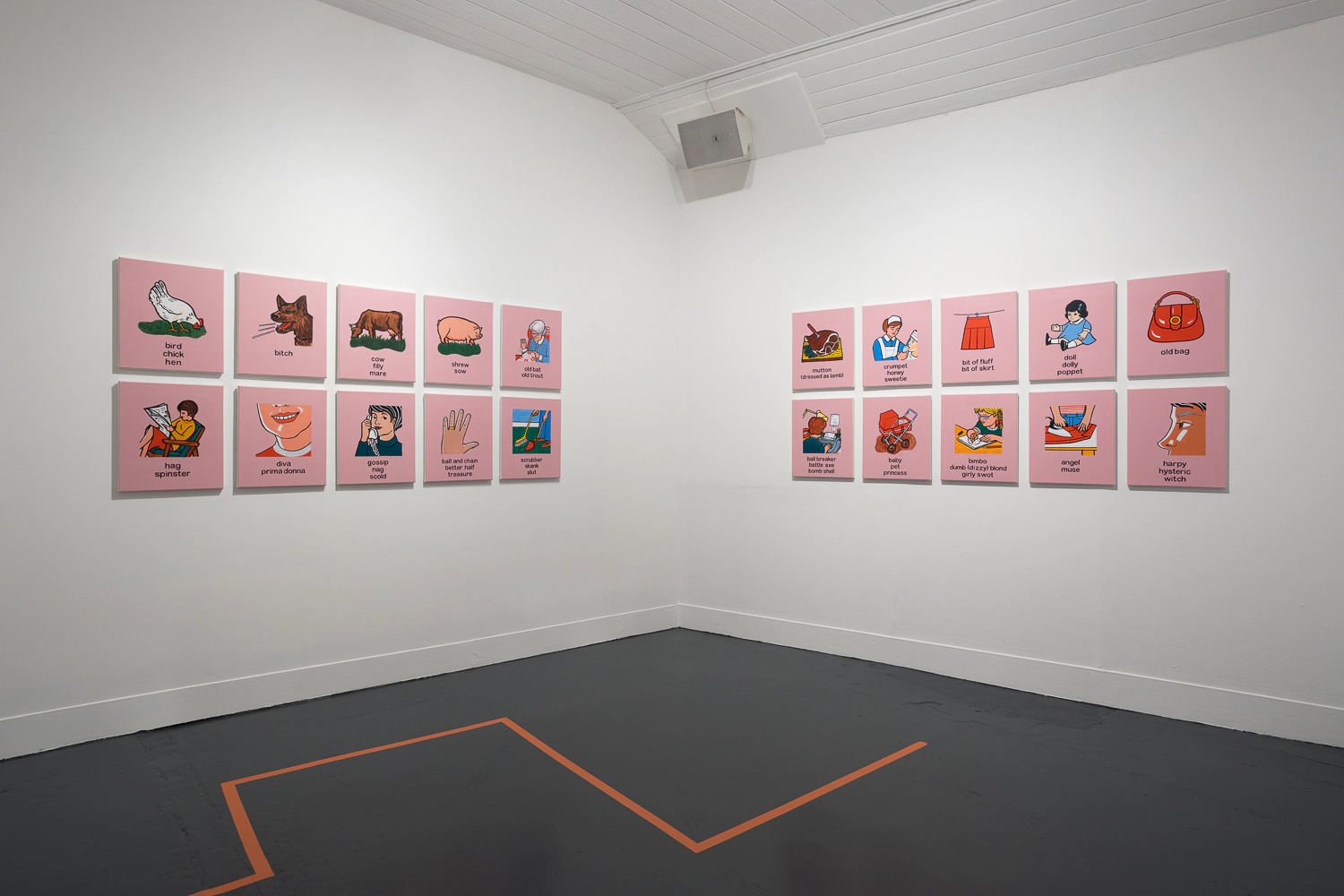
Hag Nag Harpy Hen, 2026, acrylic on canvas, series of 20
Hag Nag Harpy Hen, 2026
acrylic on canvas, series of 20
This installation, combining a series of new paintings and a sound piece, considers patriarchal and misogynist language that has been used to describe women throughout history and continues to be part of common parlance today. The paintings are based on a 1970s school reader which depicts educational images of daily life, that conform to problematic norms and beauty conventions. The women in the images are thin, white and mostly engaged in traditionally feminine pursuits such as cleaning or caring. Paired together with this imagery, the choice of words highlight how stereotypes are taught and perpetuated across generations.
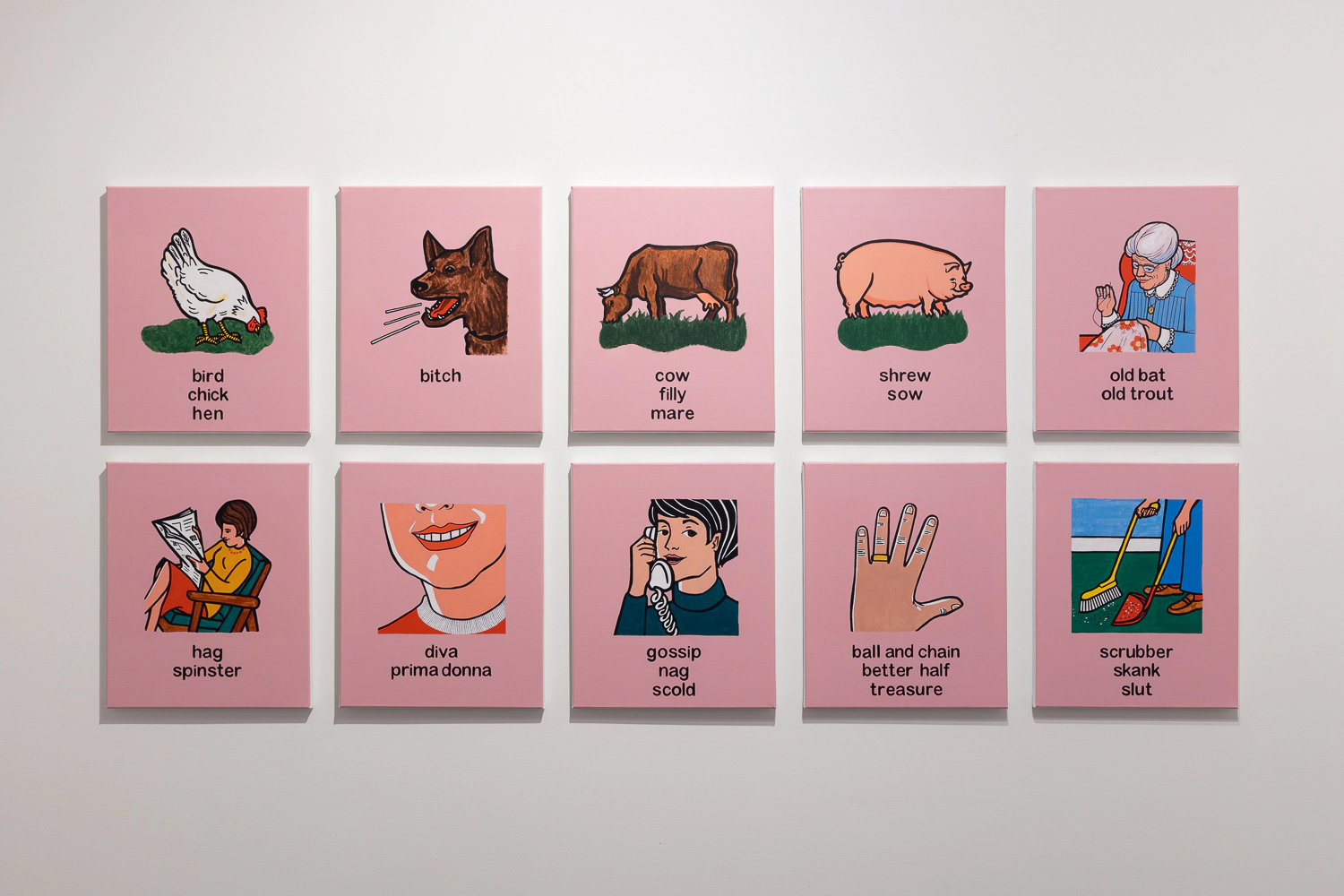
Hag Nag Harpy Hen (detail), 2026, acrylic on canvas, series of 20
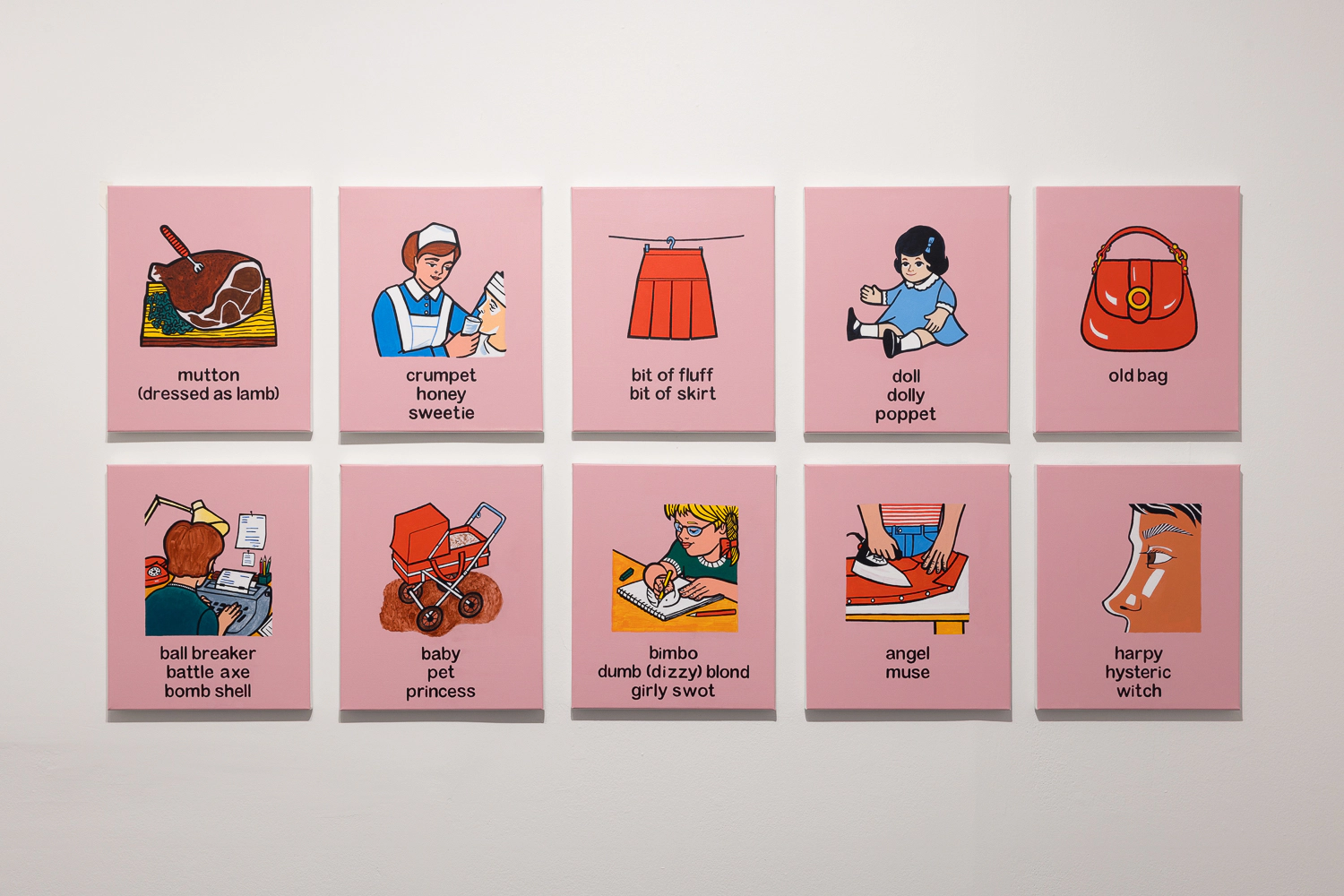
Hag Nag Harpy Hen (detail), 2026, acrylic on canvas, series of 20
Mastering the Voice, 2023
single channel sound piece, 8:58 min
The sound work, originally developed with voice coach Irene Martín Guillén, is inspired by my own experience of undergoing speech therapy following a virus that left me unable to speak for a year. Through a series of rehearsed voice exercises performed by a group of women and non-binary people, the piece examines how gender roles are learned and performed through the voice. As the group rehearse the exercises, they rebel against the words, shifting pitch, choking and cackling to reach a cacophonous crescendo.
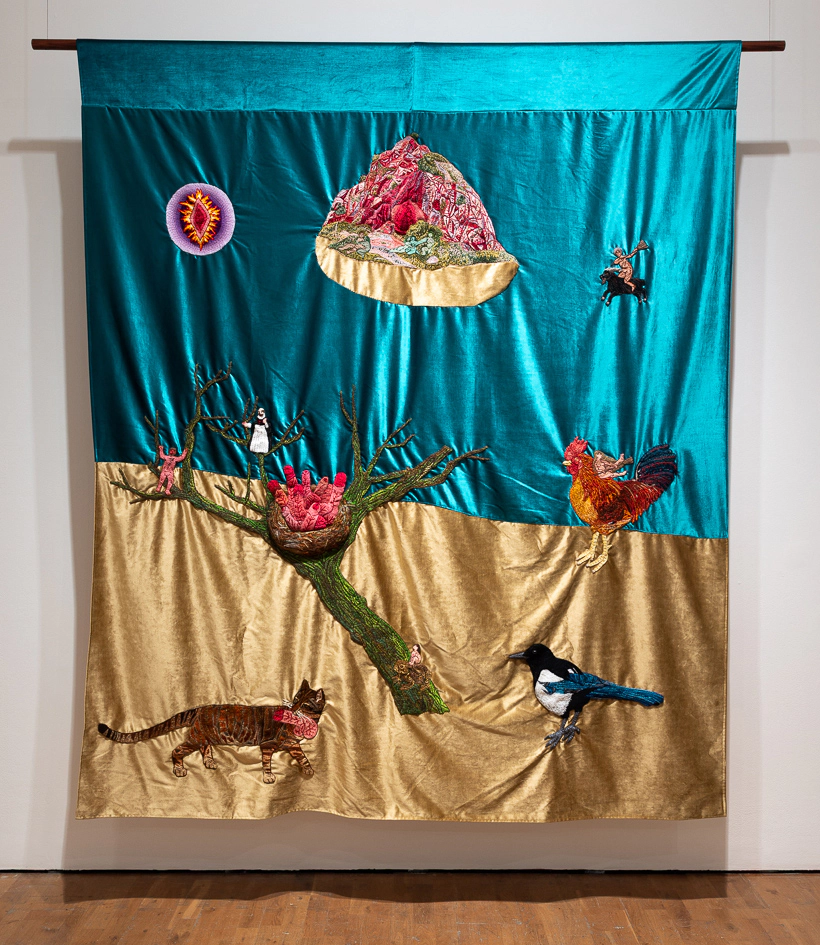
The Witches’ Sabbat, 2026, embroidered textile
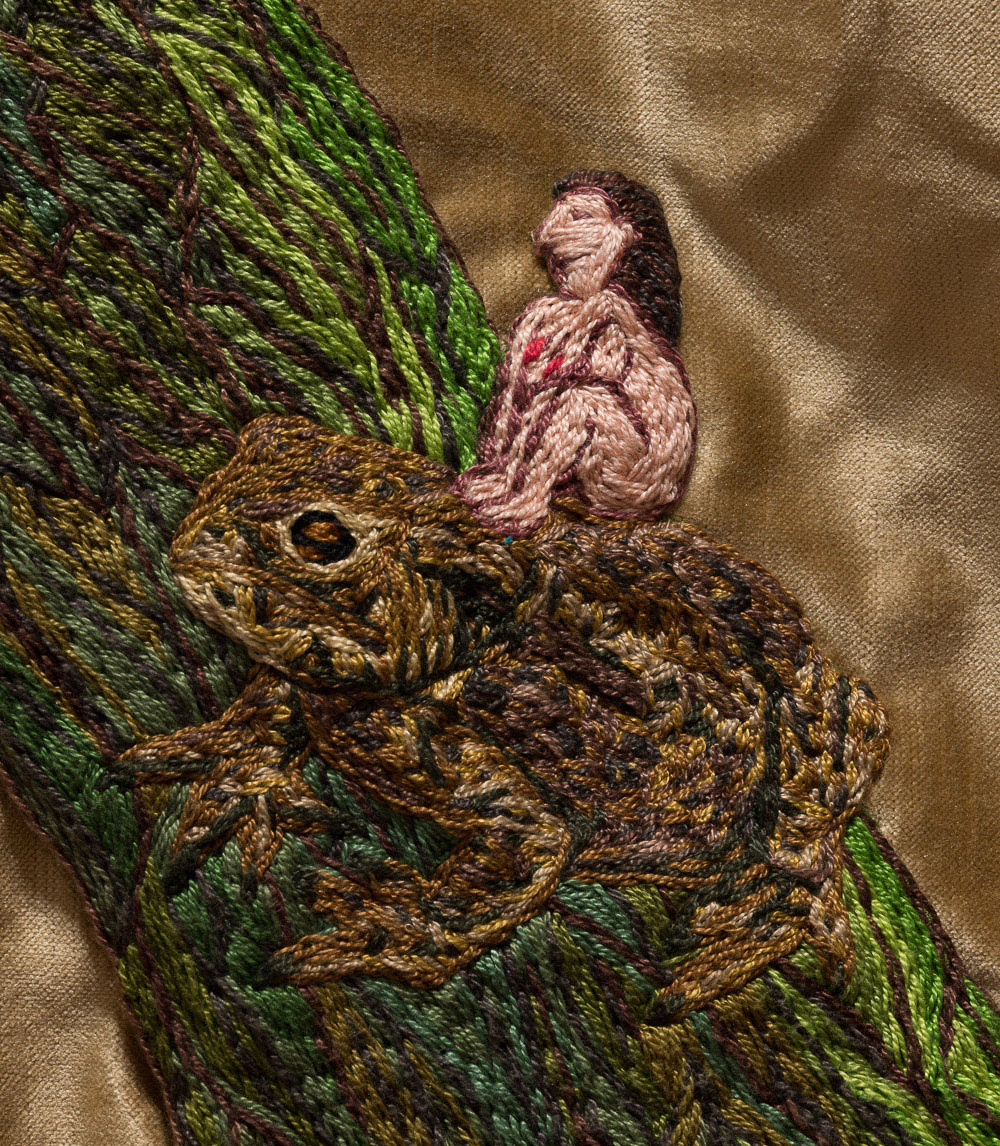
The Witches’ Sabbat (detail), 2026, embroidered textile
The Witches’ Sabbat, 2026
embroidered textile
This intricately embroidered textile is loosely based on the Malleus Maleficarum (Hammer of Witches), a witch hunting manual published in 1486 and written by priest Heinrich Kramer. Despite being the paranoid fantasies of a medieval mysogynist, the book nonetheless became influential in the early modern period. The book alerts us to an epidemic of witches and midwives stealing men’s penises and hiding them in nests in trees, providing women with herbs for both contraception and abortion and eating babies at satanic masses. The book advocates control of women’s reproductive ability and demonises the medical knowledge that enabled them to lead lives not defined by reproduction. Highlighting the absurdity of the scenes described in the Malleus Maleficarum, I reflect on the image of the witch as a symbol of autonomy and queer female power, reclaimed by feminists in the 20th century.
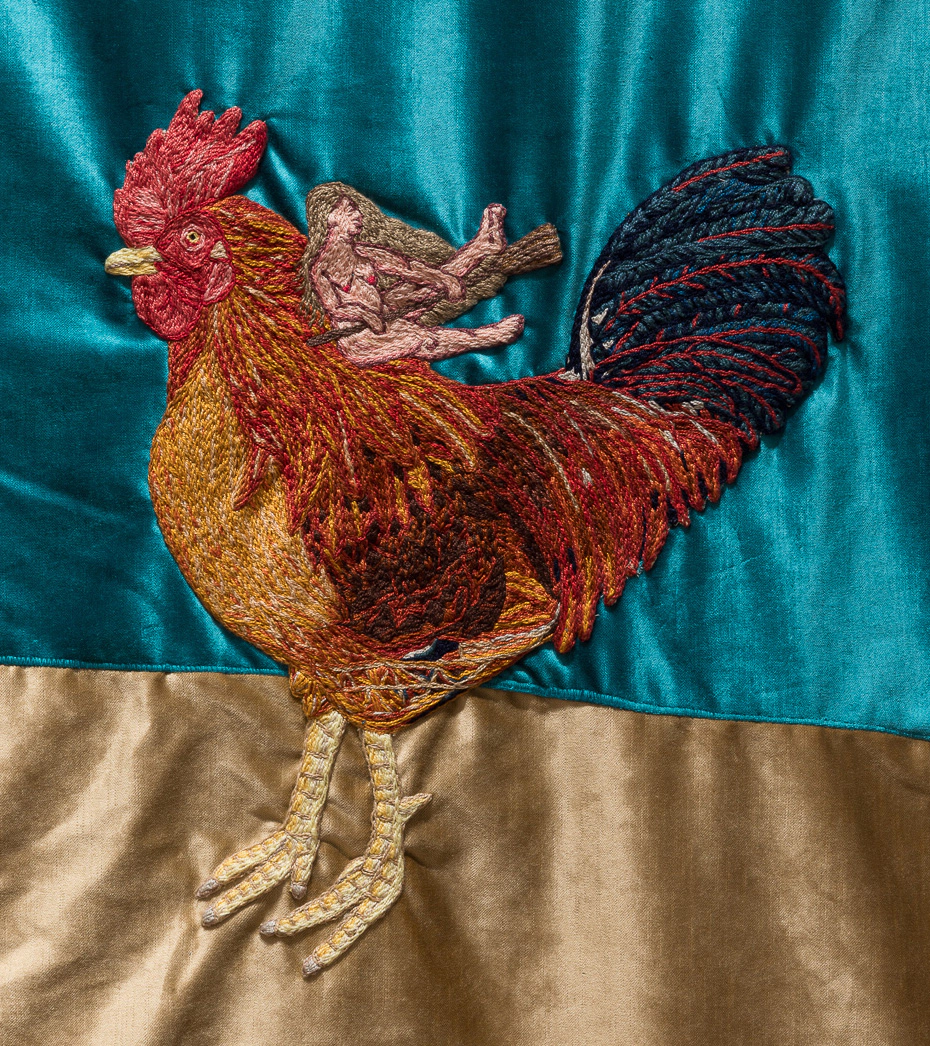
The Witches’ Sabbat (detail), 2026, embroidered textile
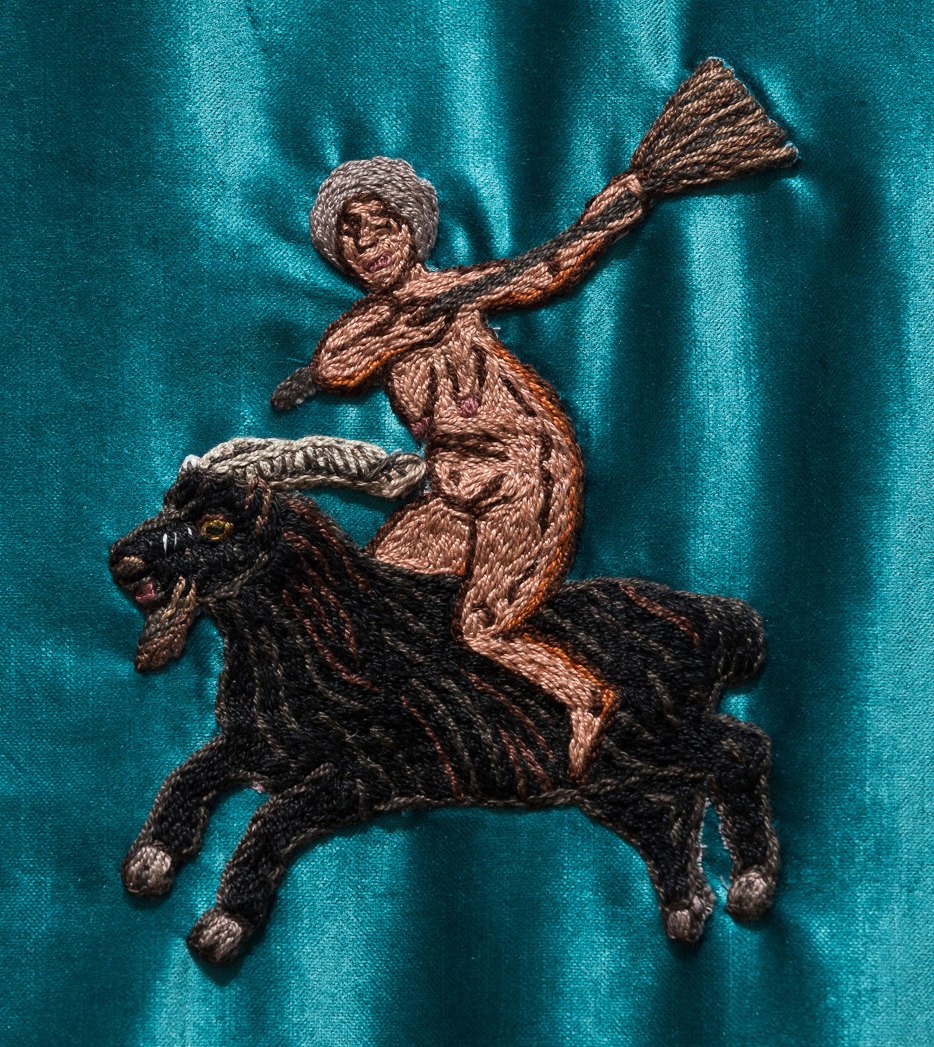
The Witches’ Sabbat (detail), 2026, embroidered textile
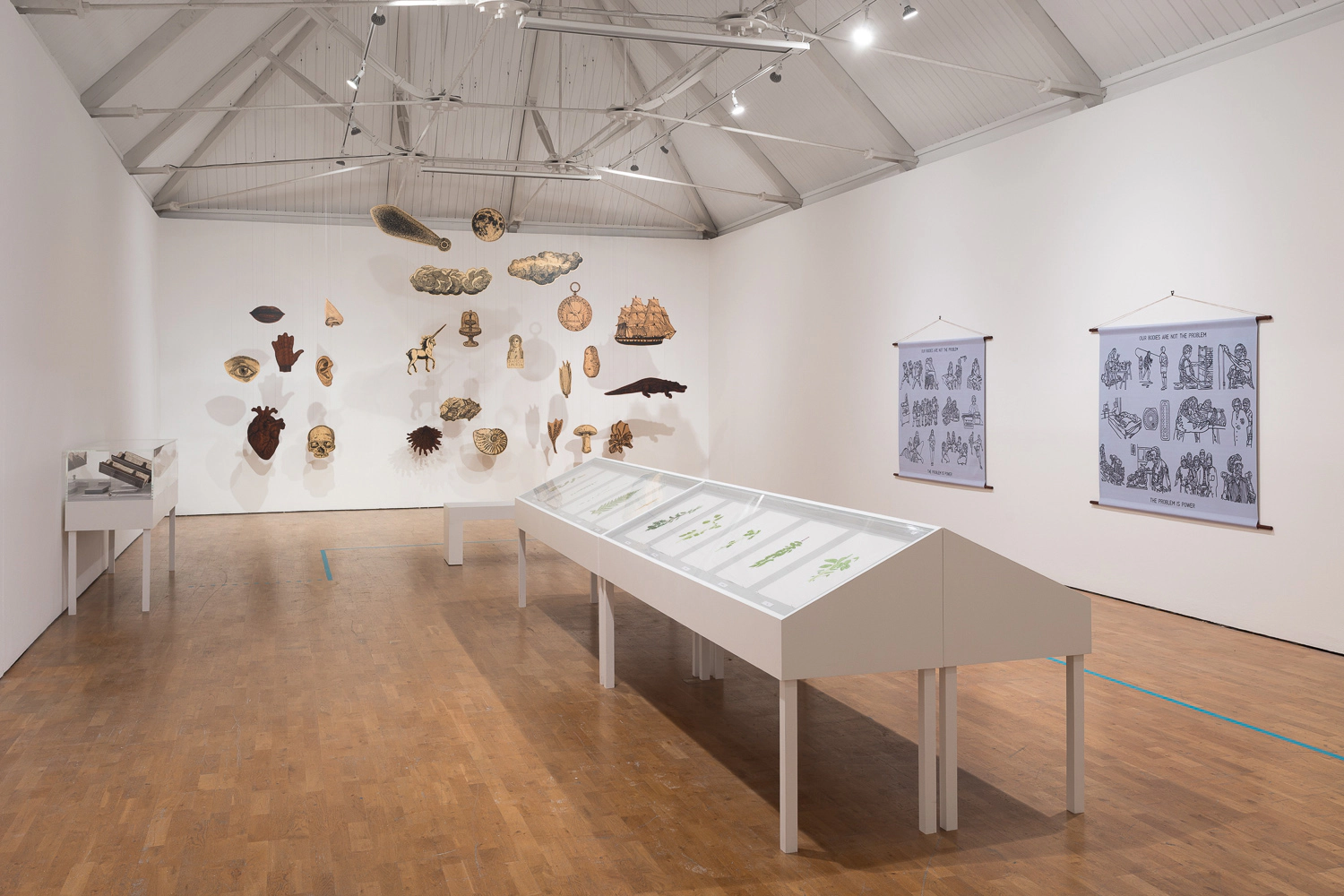
‘Little Fennel’s Complaint’, installation view at Modern Art Oxford, 2026
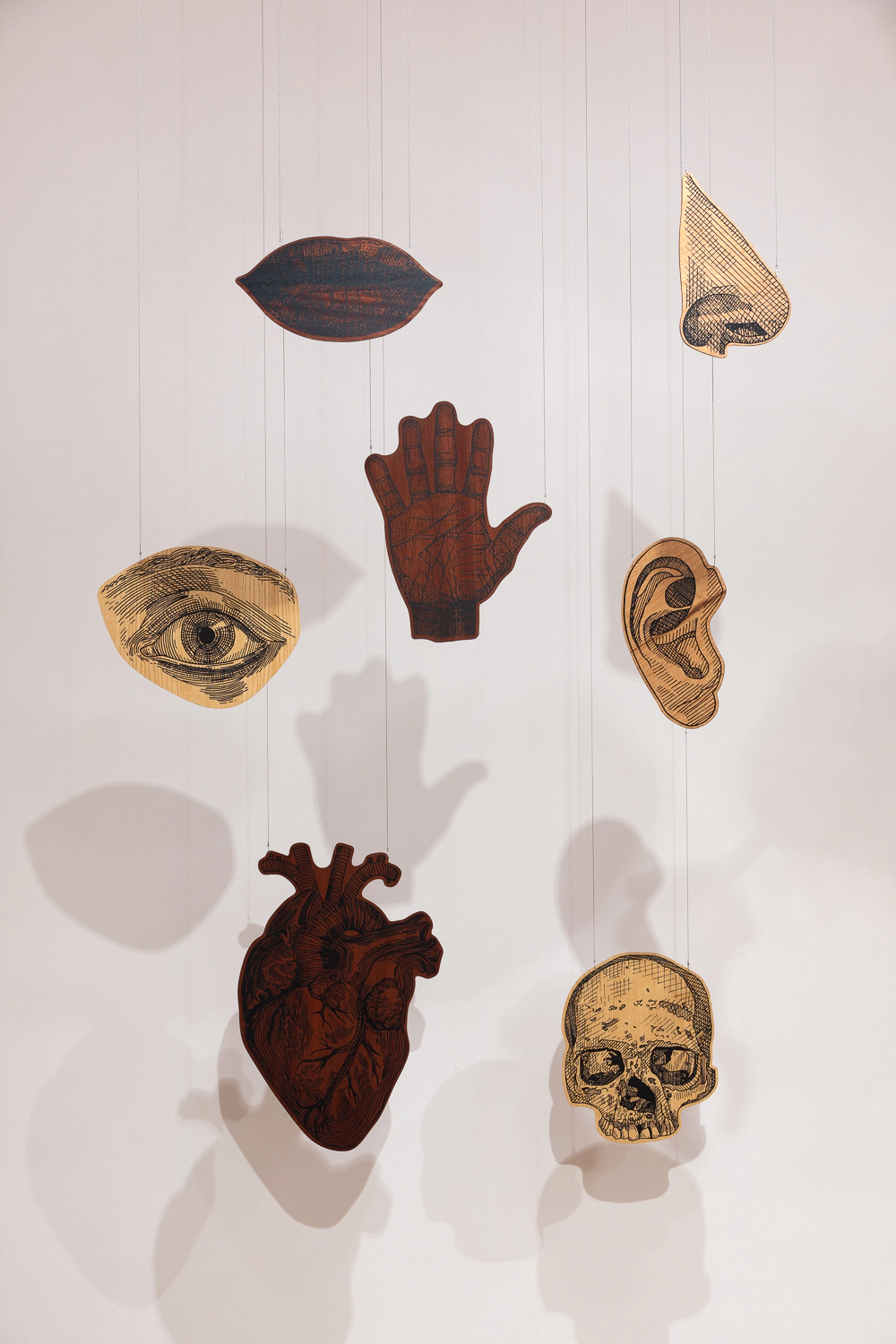
The Rehabilitation of Curiosity (detail), 2024 and 2026
laser printed wood
The Rehabilitation of Curiosity, 2024 and 2026
laser printed wood
This hanging mobile explores humoral medicine, based on the ancient theory of the four humors, and considers the history of encyclopaedic knowledge, collection and classification in Europe, from the Renaissance and early modern period to the Enlightenment of the 18th century, to the present day. It brings together an assortment of imagery ordered in the manner of a cabinet of curiosities. These were popular among European elites during the Renaissance, containing objects representing what they considered to be all the different branches of knowledge and ways of knowing; including knowledge of the heavens and the natural world, as well as the plants and animals brought to Europe as a result of colonialism. Presented in the style of encyclopaedic drawings, The Rehabilitation of Curiosity highlights the gaps, absences and omissions that have underpinned systems of categorisation and classification throughout history. Exhibited alongside Richard Napier's astrological casenotes, the mobile highlights how these knowledge systems have shaped approaches to medicine and asks us to consider what kinds of medical knowledge might have been omitted or lost.
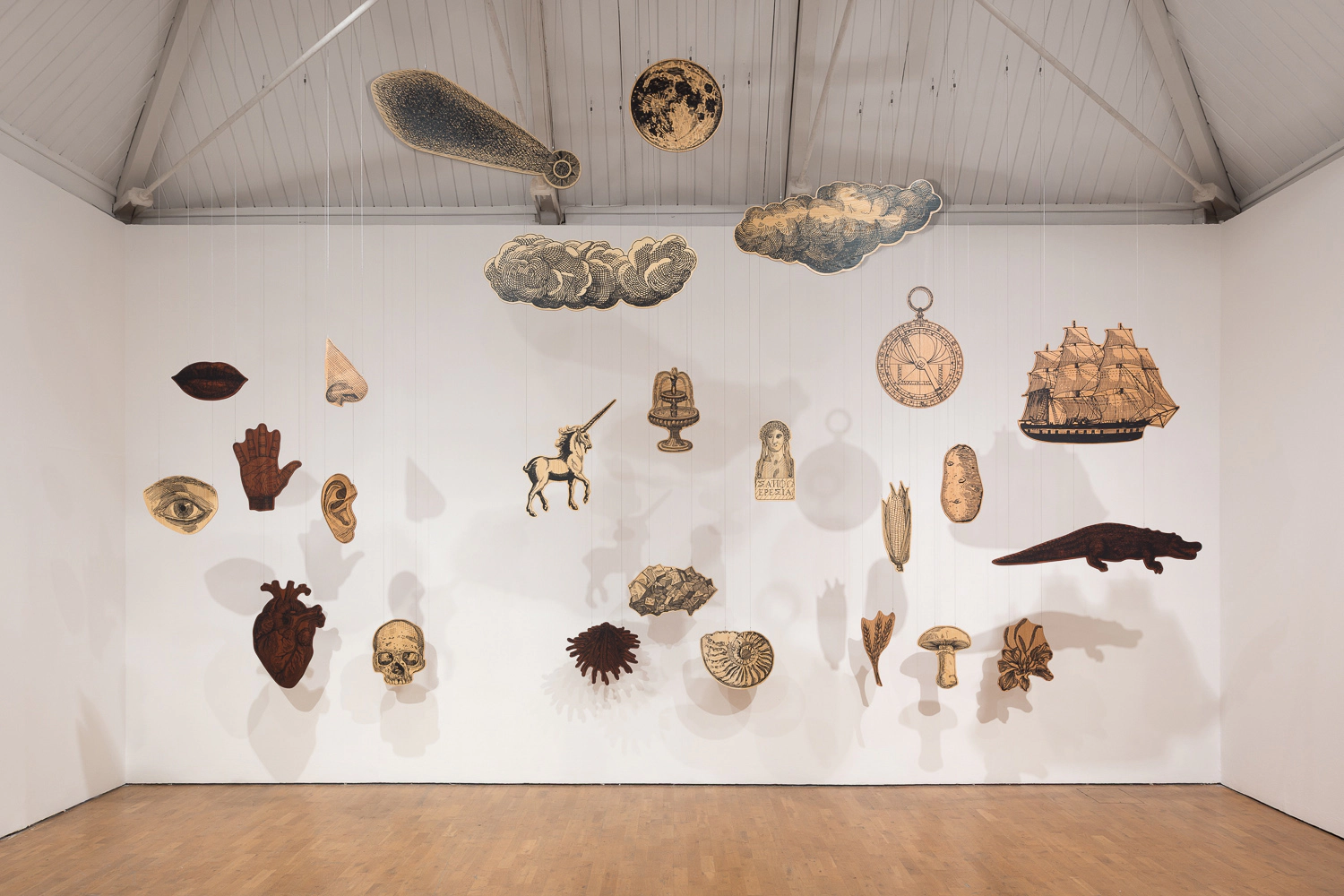
The Rehabilitation of Curiosity, 2024 and 2026, laser printed wood
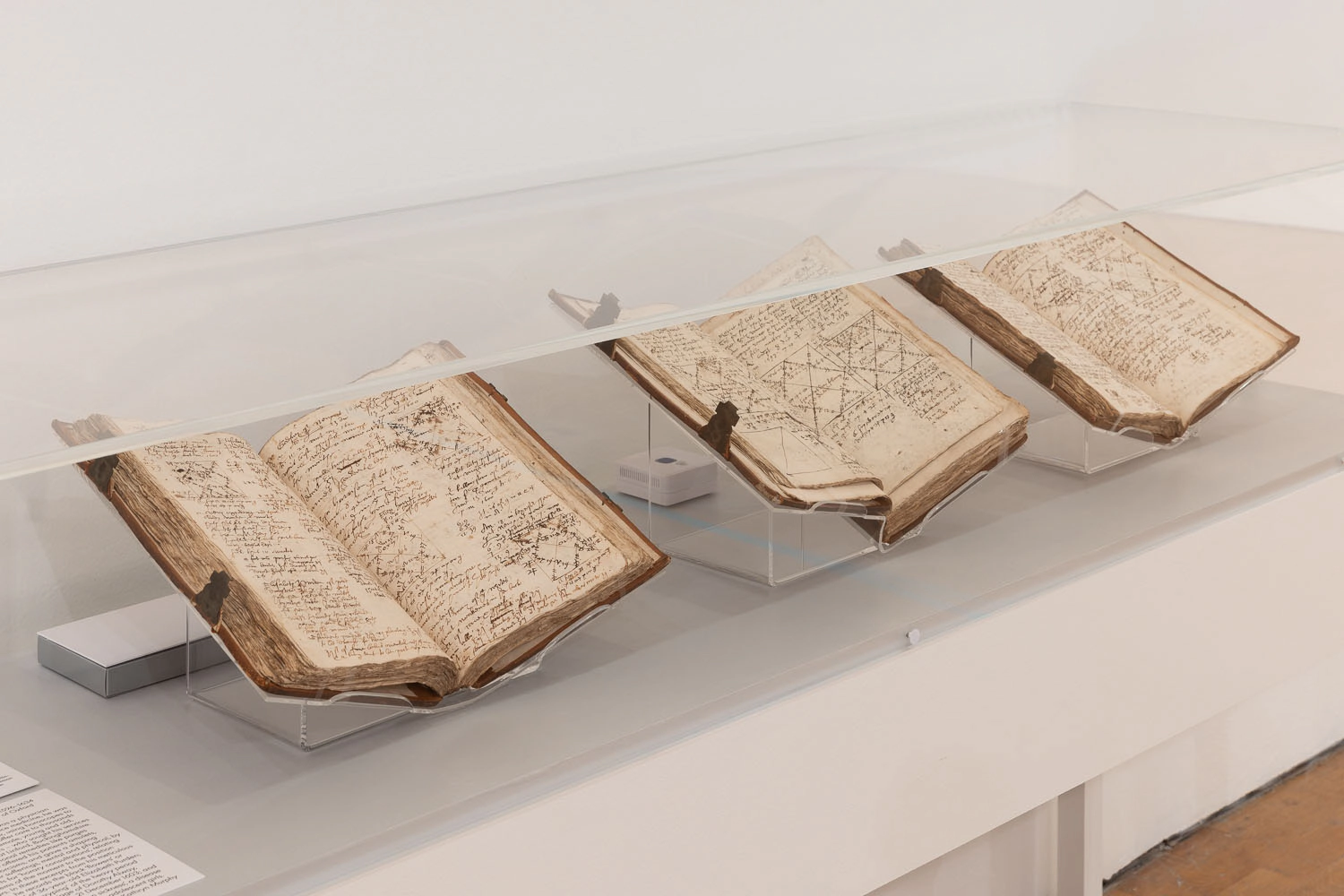
The casebooks of Richard Napier, 1596–1634
collection of The Bodleian Libraries, University of Oxford
The casebooks of Richard Napier, 1596–1634
collection of The Bodleian Libraries, University of Oxford
Richard Napier (1559–1634) was a physician and priest. Licensed to practice medicine, he was also a consulting astrologer, using horoscopes to interpret, diagnose, and offer care to thousands of people – male and female, young and old, gentry and commoners – who sought his services at his rectory in Great Linford, Buckinghamshire. Alongside conventional remedies like purges and bleeding, he offered his patients amulets, prayers, and exorcisms, and gave a shaping context to their sufferings, mental and physical, by casting charts for ‘horary consultations’, relating their problems of the moment to the position of the stars. In these excerpts from his meticulous notebooks, he records the black ‘flowers’ or period blood of 36-year-old Elizabeth Purden; the ‘plucking & gryping’ of the heavy period or possible miscarriage of Dorothy Alway, who consulted him on 21 December 1603; and Isbell Gravestocke’s ‘green sickness’, a disease particularly associated with adolescent girls.
– Text by Professor Kathryn Murphy
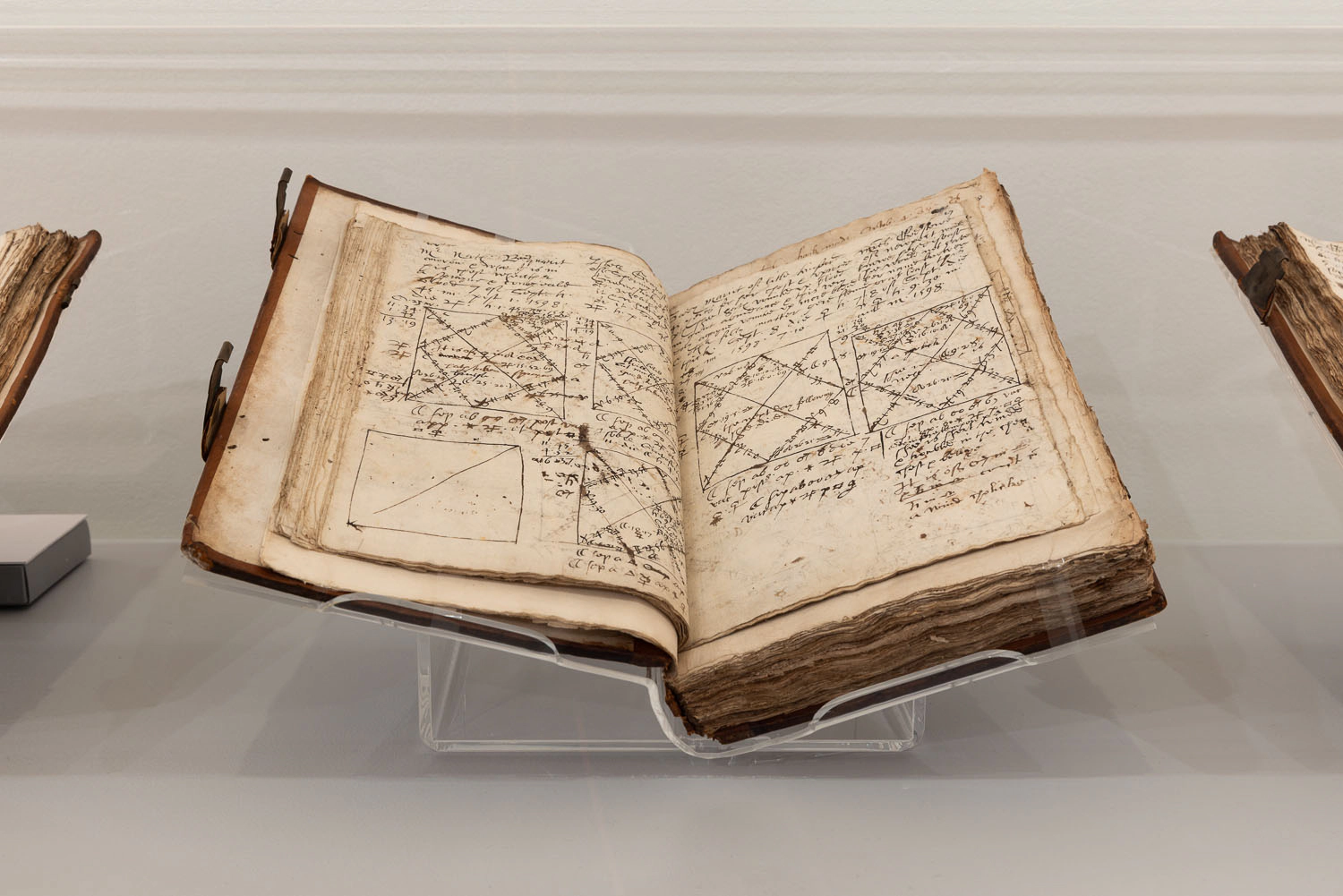
The casebooks of Richard Napier, 1596–1634, collection of The Bodleian Libraries, University of Oxford
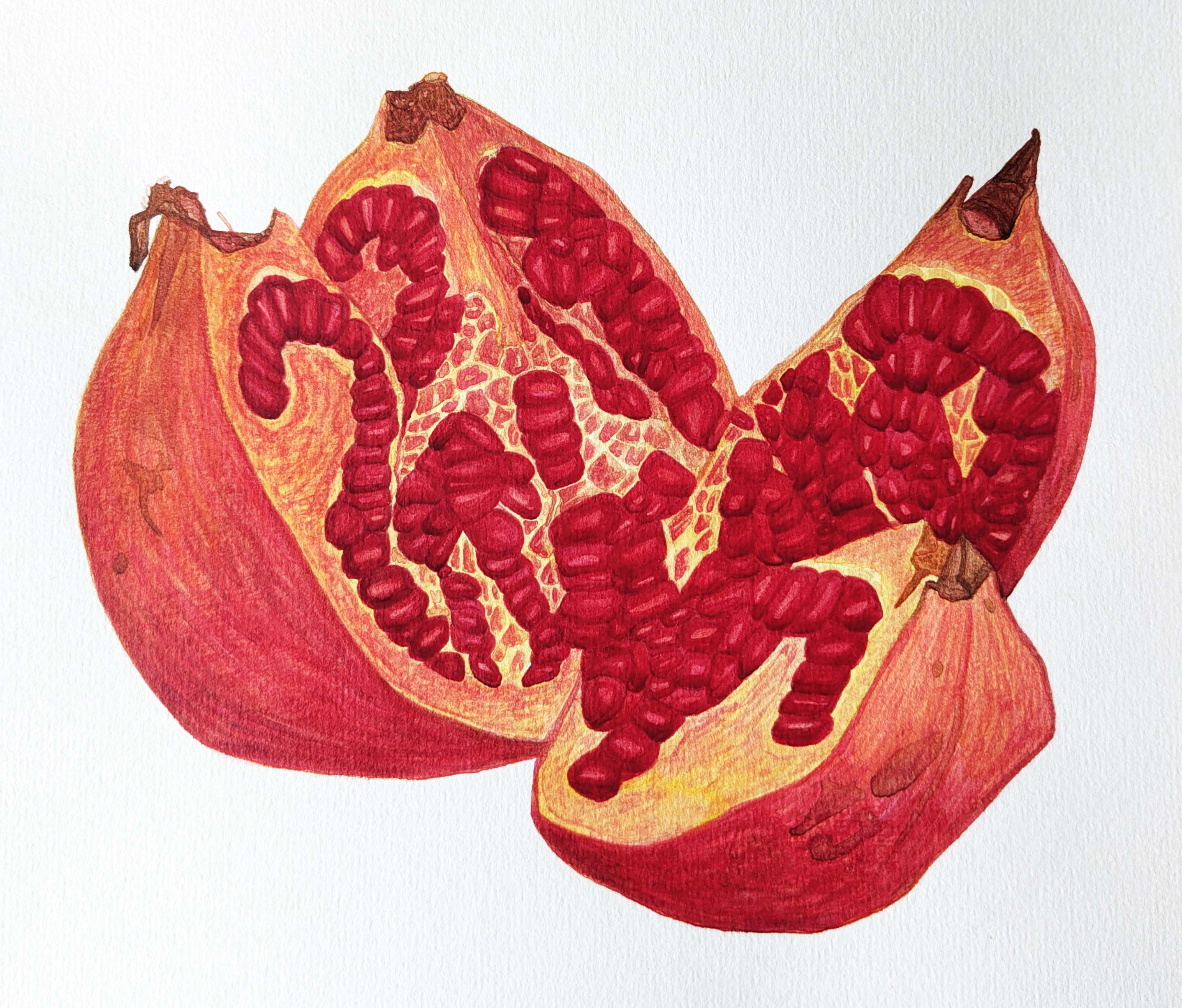
Bringing Down the Flowers (pomegranate), 2023-2026 watercolour on paper, series of 20
Bringing Down the Flowers, 2023-2026
watercolour on paper, series of 20
This ongoing series of watercolour paintings depicts plants that have been used historically by women to give themselves an abortion. The plants are presented in the style of genteel flower paintings – which was a popular hobby for many women in the 19th century. Their veiled meaning is revealed only through the series title ‘Bringing Down the Flowers’, a phrase used in the past to describe the process of inducing abortion or bringing on menstruation. Many of the plants are common herbs, flowers and fruit such as fennel, parsley, raspberry leaf or fern, sometimes mistaken for weeds, which I forage in urban spaces – often finding them growing in mundane everyday locations at the side of the road or buying them in local supermarkets. They represent an unwritten ‘catalogue’ of hidden knowledge about female health, which would largely have been passed on orally between generations of women.
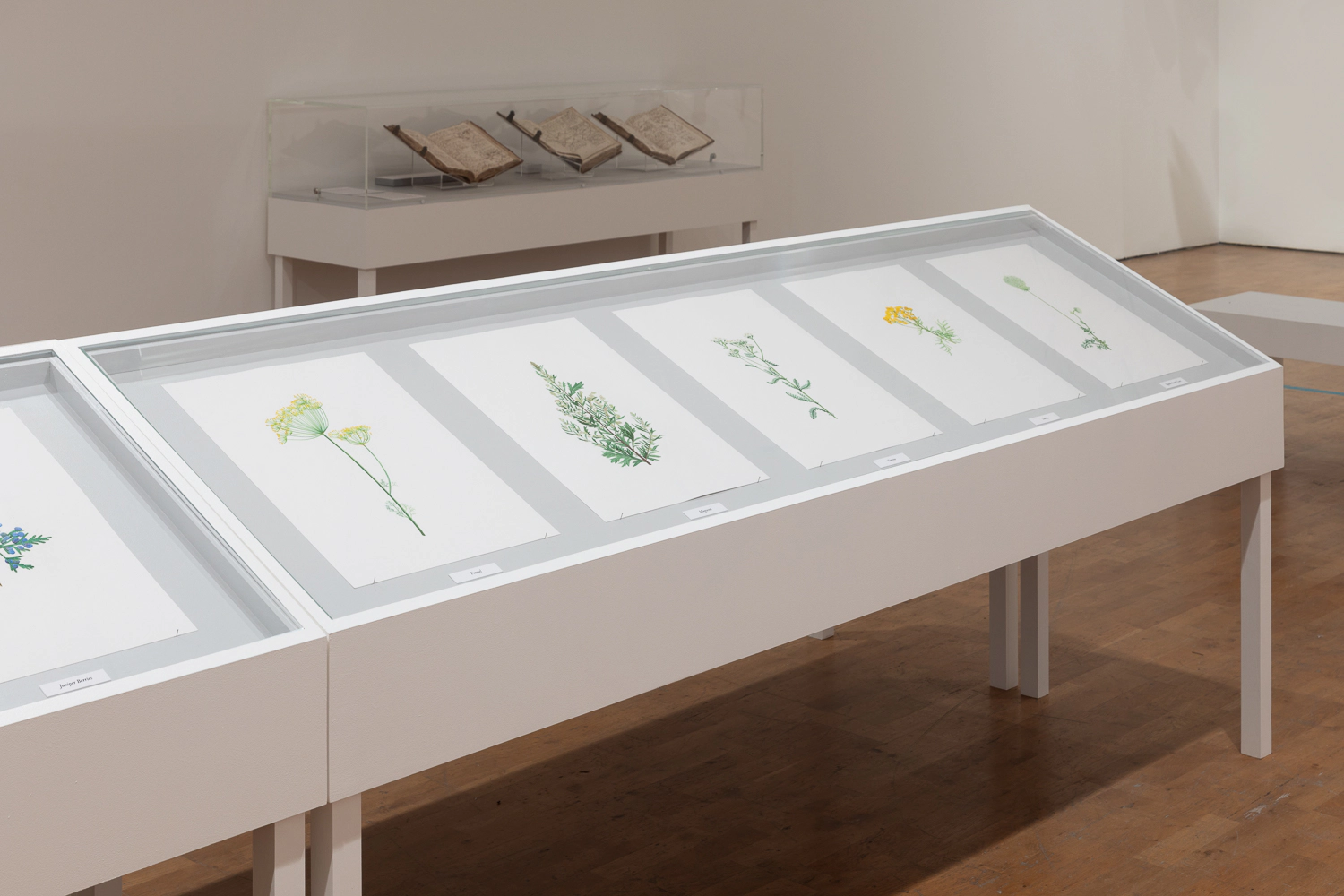
Bringing Down the Flowers (installation view), 2023-2026, watercolour on paper, series of 20
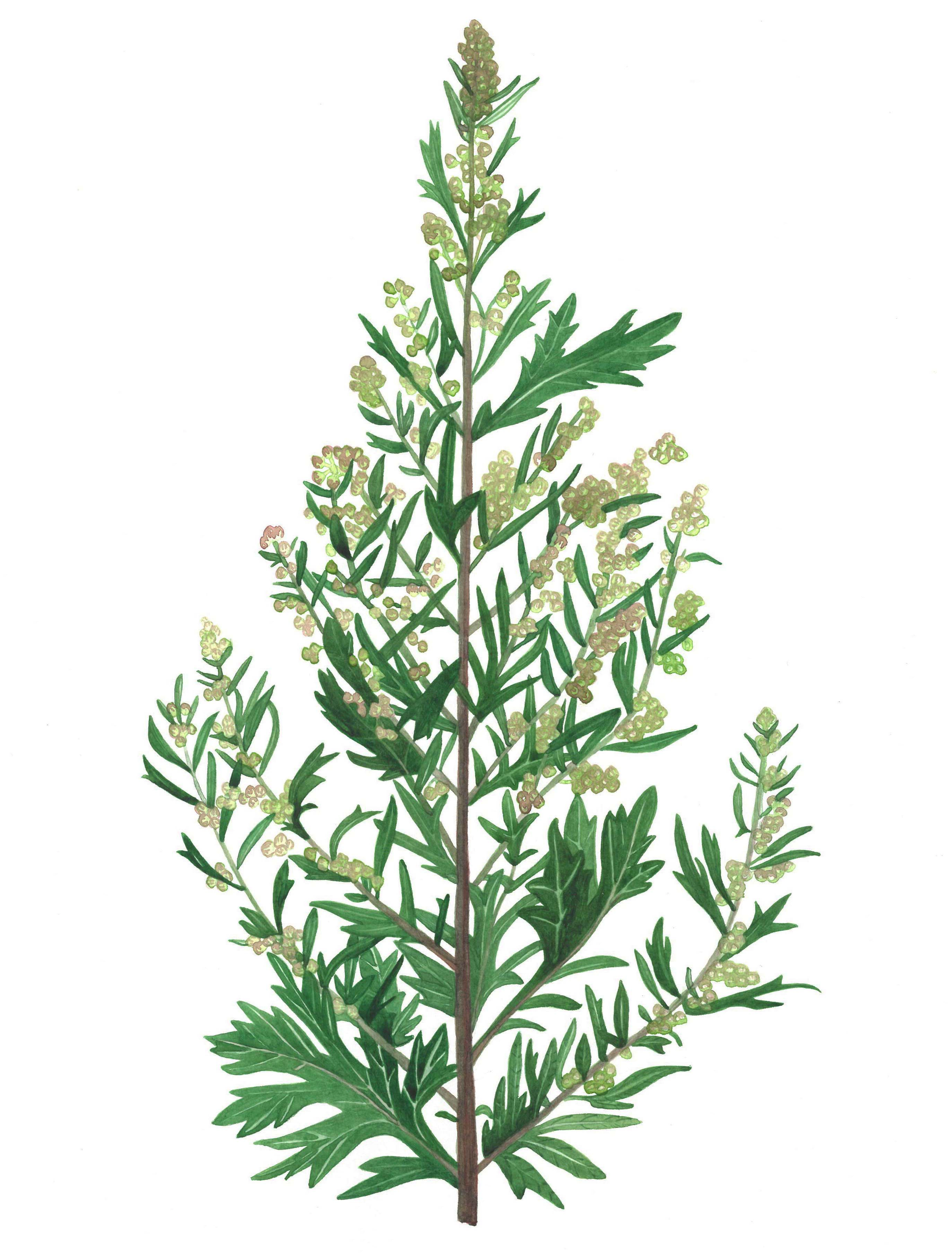
Bringing Down the Flowers (mugwort), 2023-2026 watercolour on paper, 36 x 48cm, series of 20
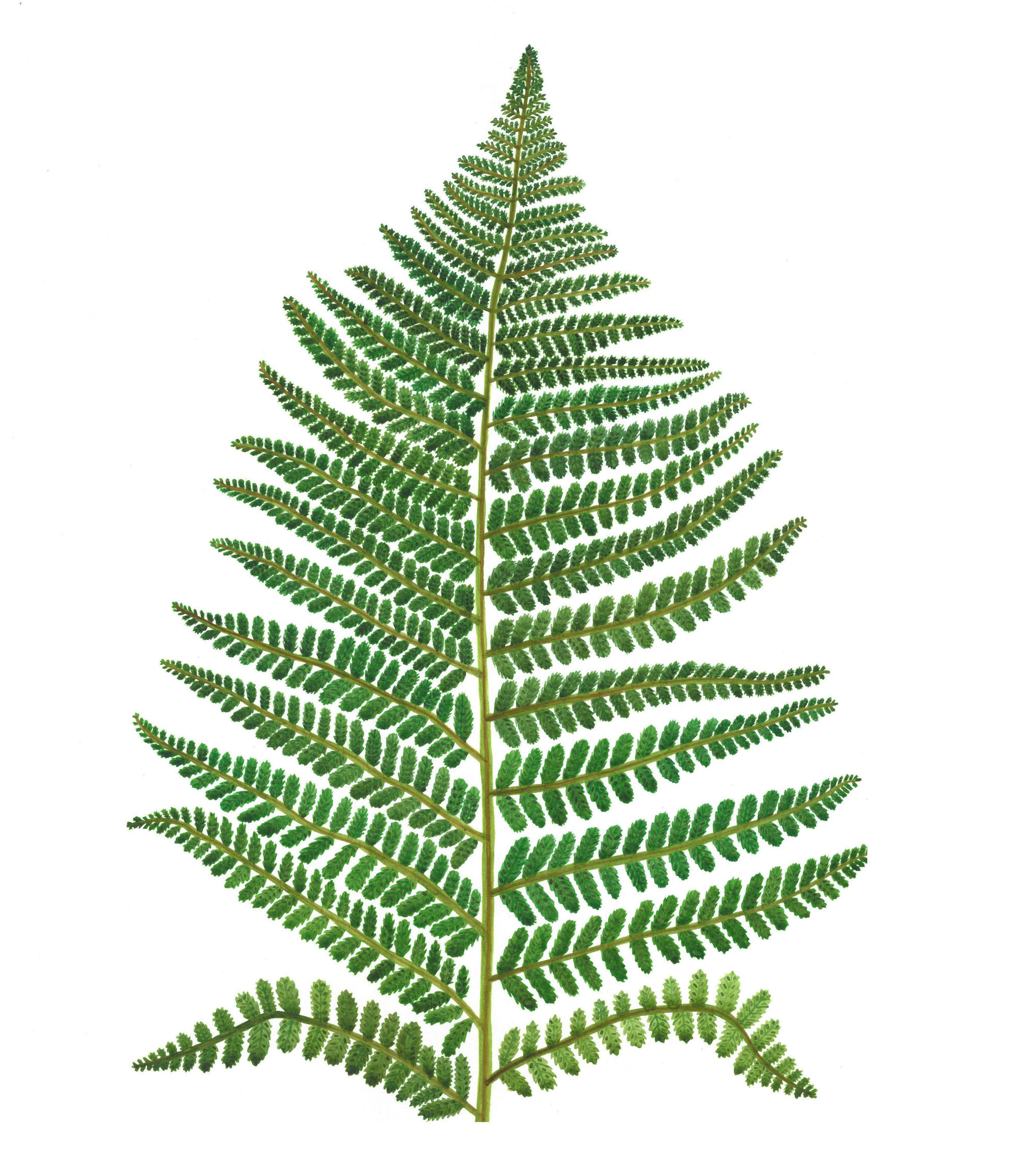
Bringing Down the Flowers (male fern), 2023-2026 watercolour on paper, 36 x 48cm, series of 20

Our Bodies Are Not the Problem, 2022, acrylic on canvas with wooden dowels and string, 133 × 149.5 cm
Our Bodies are Not the Problem, The Problem is Power, 2022
acrylic on canvas with dowels
Painted in the style of educational posters which might be found in institutional spaces such as school rooms and hospitals, these three works reference imagery from the women’s healthcare manual Our Bodies, Ourselves, first published in 1970. The book grew out of the Women’s Liberation Movement in the USA, through workshops and consciousness raising groups formed to advocate for women’s health needs. The text has been revised and republished numerous times around the world and is still used today.
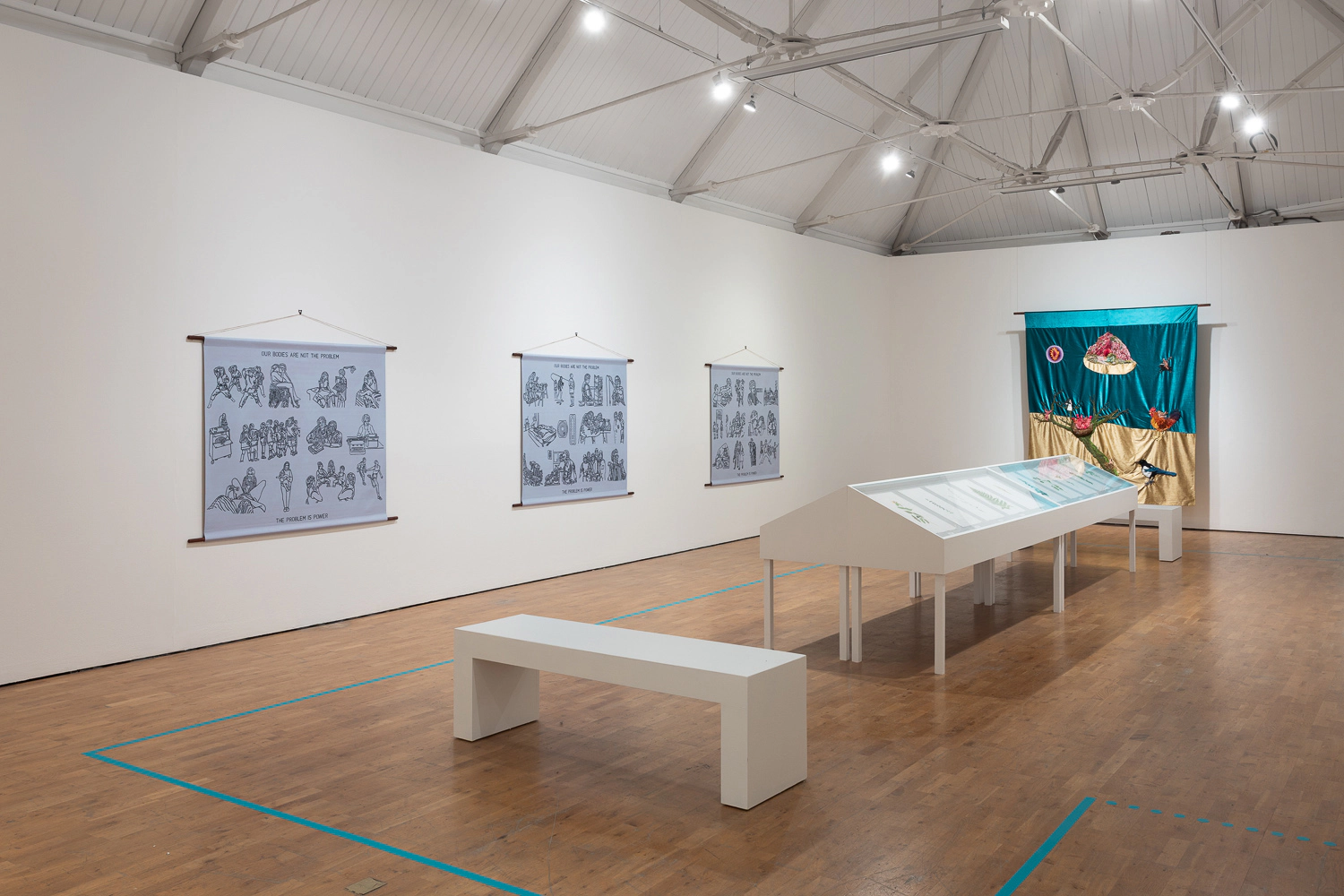
‘Little Fennel’s Complaint’, installation view at Modern Art Oxford, 2026
Further Reading
‘Little Fennel’s Complaint’, Modern Art Oxford, 2026
(view here)Review of ‘Little Fennel’s Complaint’, Modern Art Oxford, by Luisa Lorenza Corna, Art Monthly no. 498, July–August 2026
(download)Exhibition notes, including interview with Olivia Plender about ‘Little Fennel’s Complaint’
(download)